
Does Homeowners Insurance Cover Mold in PA?
In Pennsylvania, homeowners insurance usually covers mold only when it comes from something sudden, like a burst pipe, and the payout is often capped. Our local mold specialist can give you a price for the work, so you know what you're claiming for.
When Homeowners Insurance Covers Mold in PA
Most PA homeowners policies exclude mold, except when it's caused by something the policy covers. In practice, it usually looks like this.
More likely to be covered
- A pipe that bursts without warning
- A washing machine, dishwasher or water heater that suddenly leaks
- A roof damaged in a storm, then leaking
- Water from putting out a fire
Usually not covered
- A slow leak you knew about but didn't fix
- High humidity or poor ventilation
- Water seeping through basement walls
- Flooding from outside, which needs flood insurance
This is general information, not insurance or legal advice. Your own policy wording decides what's covered, so it's worth reading the mold section or asking your agent.
How Much Insurance Pays for Mold
Even when insurance covers mold remediation, it rarely pays for all of it. Most policies set a separate, lower limit just for mold, and your deductible comes off first, so a large job can cost you more than you'd expect.
Compare those limits with what mold remediation usually costs to see how much of a job your policy might pay for.
Mold From a Roof Leak and Other Common Claims
Homeowners insurance covers mold from a roof leak when the roof was damaged suddenly, like in a storm, but not when it simply wore out. The same idea applies everywhere else in your home, and it's the cause that matters, not where the mold ends up.
Attic and roof leaks
More likely coveredA tree branch or storm tearing shingles off, followed by a leak.
Usually not coveredAn old, worn roof, or damp from poor ventilation.
Basement
More likely coveredA burst pipe, water heater or washing machine flooding it suddenly.
Usually not coveredWater seeping through the walls, or flooding from outside.
Crawl space
More likely coveredA pipe under the floor bursting without warning.
Usually not coveredGround moisture, humid air through the vents, or a slow drip.
Air ducts
More likely coveredWater suddenly leaking from the heating or cooling system.
Usually not coveredCondensation and humidity building up over time.
Renters Insurance and Mold
Renters insurance covers mold damage to your belongings only when it comes from a covered event, like a pipe bursting in the apartment above. It doesn't pay to remove mold from the building itself, because that's the landlord's property and the landlord's responsibility.
Pennsylvania landlords have to keep rentals fit to live in, so if you find mold, tell your landlord in writing and keep dated photos. You'll also find a short guide to mold in a Pennsylvania rental under mold inspection and testing.
Good to know
Theirs vs yours
Your landlord's policy covers the building. Your renters policy covers your things.
Mold After a Flood and Your Flood Policy
Flood insurance is separate from homeowners insurance, and standard National Flood Insurance Program policies don't cover mold damage either. The exception is when you couldn't get in to clean up, for example because officials closed the area or floodwater was still inside the house, so drying out quickly and taking photos matters just as much after a flood.
What flood insurance expects
Photos and video of the water level and damage, a quick report to your insurer, and every reasonable step to stop mold growing once it's safe to go back in.
If mold does start
Deal with it as early as you can. See what to do in the first two days under mold after water damage.
How to Get Insurance to Pay for Mold Removal
Getting insurance to pay for mold removal mostly comes down to acting fast and keeping a clear record. These steps give your claim the best chance.
-
Step 1: Stop the water and limit the damage
Turn off the water, dry what you can and move belongings out of the way, because policies expect you to take reasonable steps to stop things getting worse.
-
Step 2: Photograph everything first
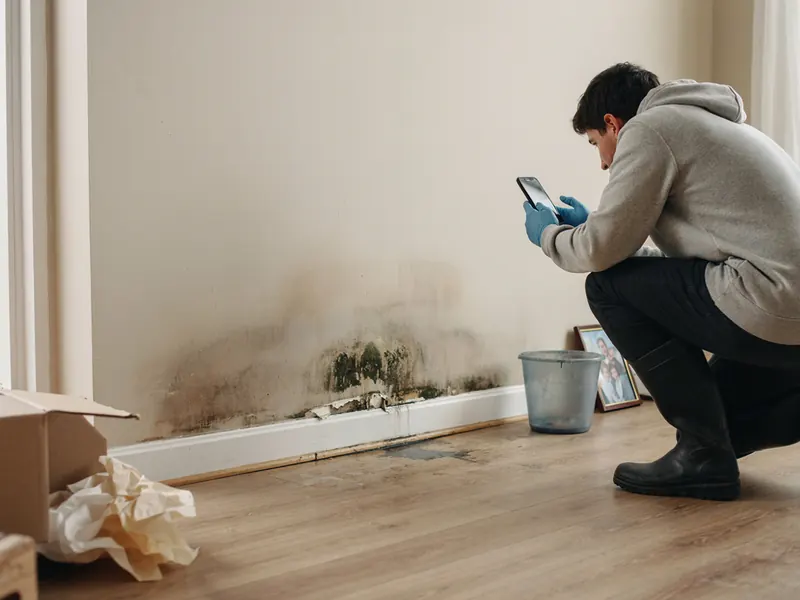
Take photos and video of the water, the mold and anything damaged before you clean up or throw anything away.
-
Step 3: Call your insurance company quickly
Report it as soon as you can, because the longer mold has to grow, the harder it is to show it came from one sudden event.
-
Step 4: Get the cause on paper
Keep the plumber's invoice for the burst pipe or the roofer's report on storm damage, and consider a mold inspection report showing where the moisture came from.
-
Step 5: Keep estimates and receipts
Save the remediation estimate, receipts for anything you had to buy and notes of every call, and ask your insurer what your mold limit is.
Need a price to go with your claim?
Tell us what happened and our local mold specialist will send you a price for the mold removal, ready to pass on to your insurer.
If a claim is denied and you think it shouldn't have been, the Pennsylvania Insurance Department's Consumer Services Bureau can help.
Mold Insurance FAQs
Should I tell my insurance company about mold?
Report it promptly if the mold came from something sudden, like a burst pipe, because a delay can weaken the claim. If it's from long-term damp, it's worth checking your policy or asking your agent how mold is handled before you file.
Can you claim mold on house insurance?
You can when it came from a covered event, such as a burst pipe or storm damage, and you acted quickly to stop more damage. Mold from humidity, slow leaks or poor upkeep usually isn't claimable, and most mold payouts are capped. That matters most during a sale, which this page covers.
Does homeowners insurance pay for mold testing?
Testing is usually only paid for when it's part of a covered claim, like mold found after a burst pipe. Testing on its own, just to check something you've noticed, generally comes out of your own pocket. See what mold inspection and testing involves.
Get a mold remediation estimate
Tell us where the mold is and how to reach you, and we'll pass it straight to our local mold specialist, who'll get back to you with a price for the job. Want a rough figure first? See what mold remediation usually costs, or check the Adams County towns covered.
Call now (223) 747-0678 Mold remediation in Gettysburg and Adams County