
Mold Inspection Before You Buy or Sell a Gettysburg Home
Selling a house with mold in it, or buying one where the home inspector found some? Our local mold specialist will come and look, take moisture readings and write it all down, so you know where the mold is, what's causing it and what it costs to clear.
What You Have to Tell a Buyer About Mold
When you sell a house in Pennsylvania you fill in a disclosure form. It asks whether you know about water leaking or sitting in the basement or crawl space, whether anyone has done work to fix it, and whether there's mold, mildew or fungus in the house.
On older Adams County houses, the dampness in the basement has often been there since before the current owner bought the place, which is why it gets left off the form. A stone cellar that's been damp for a hundred years doesn't feel like something to disclose. The form doesn't ask whether it's a defect. It asks whether you know about it, and you do. Selling as-is doesn't get you around the questions either. As-is only means you're not paying to fix anything, so the damp basement goes on the form, and so does the wall you had dried out after the washing machine overflowed.
Tell the buyer early. A damp corner you've mentioned yourself is just a damp corner, but one their inspector finds sets them wondering what else never made it onto the form.
Putting the house on the market?
Tell us what you've found in the basement and roughly when it started, and our local mold specialist will take moisture readings and write you a report before the first buyer walks through.
Getting the Mold Checked Before You List
Get our local mold specialist to look at the house before you list it rather than after you've taken an offer. Once you're under contract, every day you spend fixing something is a day the buyer's financing clock is still running. An inspection runs $300 to $700 and tells you where the mold is, what's feeding it and what clearing it would cost. From there you can fix it, knock the price down to cover the work, or hand the report over and let the buyer decide.
Don't paint over it. It grows back through the new paint, and if that happens after you're under contract, you're no longer explaining a damp wall. You're explaining why somebody covered one up.
If yours is one of the older houses anywhere in Adams County, read mold in old Gettysburg homes first. A stone cellar can read damp with nothing wrong with it, and telling that apart from a real leak is what the buyer's inspector will be trying to do.
When to Get a Mold Inspection as a Buyer
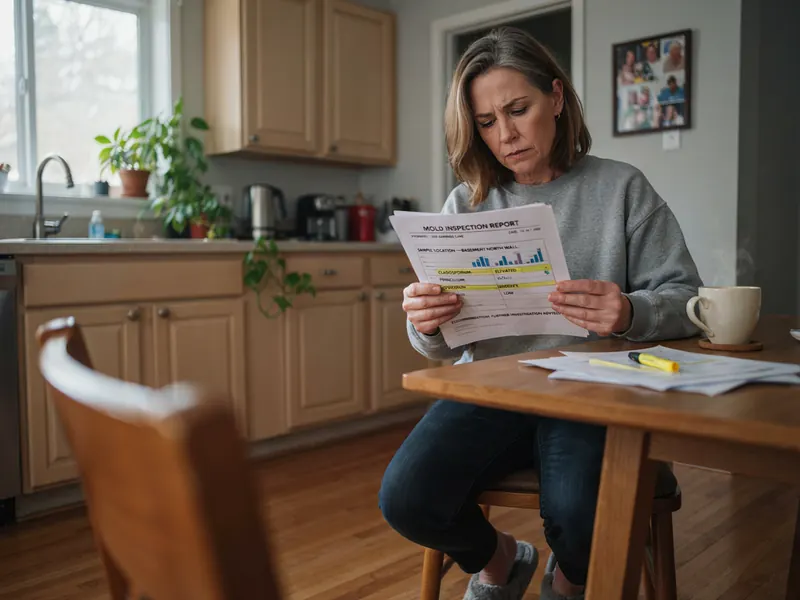
Your home inspector won't test for mold. They'll note the gray staining, tell you the basement smells musty, and say to bring in a mold specialist to look at it properly.
In this county, an inspection report that mentions moisture is pointing at one of three things.
A stone foundation with no damp course
Water climbs the wall from the ground, so the bottom two or three feet read wet while everything above stays dry.
A crawl space on bare soil
The ground gives off moisture all year, and without a sheet over it that damp goes straight up into the joists and floor.
Drywall fixed to block that was never dry
Somebody finished the basement over a wall that was still wet, which hides the damp rather than fixing it.
Get our local mold specialist out if the home inspector's report mentions moisture anywhere, or if you caught the musty smell yourself. The same goes for a basement that has been finished recently, where you can't see the foundation walls, and for a seller's form that mentions a leak they've since repaired. Chase that last one hardest, because a form saying a leak was fixed in 2019 tells you where to look and nothing about whether the fix held.
Put your questions to the seller in writing rather than through the agent on the phone. Ask whether water has come in, whether anyone has tested or done mold work before, and whether there's been an insurance claim for water or mold. If you want to know what you're paying for first, the mold inspection page goes through what happens on the day.
Who Pays for the Mold Work in a Sale
You can't negotiate over a smell. Moisture readings, photographs and a dollar figure give you both a number to talk about, and the number is usually what the disagreement is really about.
Nothing in Pennsylvania law says who has to pay, so the buyer and the seller settle it between them before closing. Your agent will have seen other arrangements, and these are the three ways it gets settled.
The seller does the work
The mold is cleared and dried before closing and the paperwork changes hands at settlement. This route suits a seller who wants the sale to keep moving without a price renegotiation.
The price comes down
The buyer takes on the job and pays less for the house, which works well for a buyer who would rather choose their own contractor.
Money sits in escrow
The sale closes on time and the funds are held back until the work is finished and checked, so a tight settlement date doesn't hold either of you up.
If there's been mold work done before, ask what came out of the wall, what was cleaned, what was repaired to stop the water, and whether anyone tested the room afterward. An invoice saying "mold treatment" and a total tells a buyer nothing.
How Long a Mold Inspection and the Work Take
Your inspection period is a fixed number of days written into the contract, and everything has to fit inside it. Here's roughly how long each part takes.
- 1–2 daysSomebody walks the house and the written report follows.
- +2–5 daysLab samples, if any are worth sending away.
- A week or moreThe work itself, depending on what's behind the drywall and how long the framing takes to dry.
September is the wettest month in Adams County, at just over five inches of rain. A cellar that stayed dry all summer can read damp on a meter by the end of September, which is also when fall listings go up. Get it inspected before you list and there's no contract clock running while you decide what to do.
If you're the buyer
Book it in the first week
An inspection booked in the first week of your contingency leaves time to get a price and put it to the seller. Booked in the last week, all you can ask for is an extension.
What a Mold Inspection and Removal Cost
An unfinished stone cellar is the cheaper job, at around $1,500, because the wall is right there to work on. A finished basement costs more, because the drywall and insulation have to come out before anyone can reach it.
These are national ranges rather than a quote for your house. The cost guide breaks the same figures down room by room.
Don't assume insurance will pay for the mold work before you agree anything. Policies cover mold that follows something sudden like a pipe giving way, but they don't cover mold that's built up over years of damp air, and they cap what they'll pay even when they do cover it. Read insurance and mold in PA before you count on any of it.
Tell us what the inspector found and our local mold specialist will come back the same day with what it would take to clear and what it would cost.
Mold and Home Sale Questions
Can you sell a house with mold in Pennsylvania?
You can, and there's no rule saying you have to test the house first. What you do have to do is tell the buyer what you know, and the disclosure form asks about basement water, repairs and mold by name.
Does a home inspection include mold testing?
It doesn't. A home inspector will note the staining or the smell and tell you to bring somebody else in, because mold inspection is a separate visit with moisture meters and lab samples if there's anything worth sampling.
Who pays for mold remediation in a house sale?
Whoever the two of you agree on. A seller might do the work to keep things moving, a buyer might rather take it off the price, and either way the money can sit in escrow until the job's done.
Get a mold removal estimate
Tell us where the house is, what the inspector wrote and when you need it done by, and our local mold specialist will come back to you the same day. Buying or selling one of the older places? Mold in old Gettysburg homes explains what a stone cellar is supposed to look like.
Call now (223) 747-0678 Mold remediation in Gettysburg and Adams County